
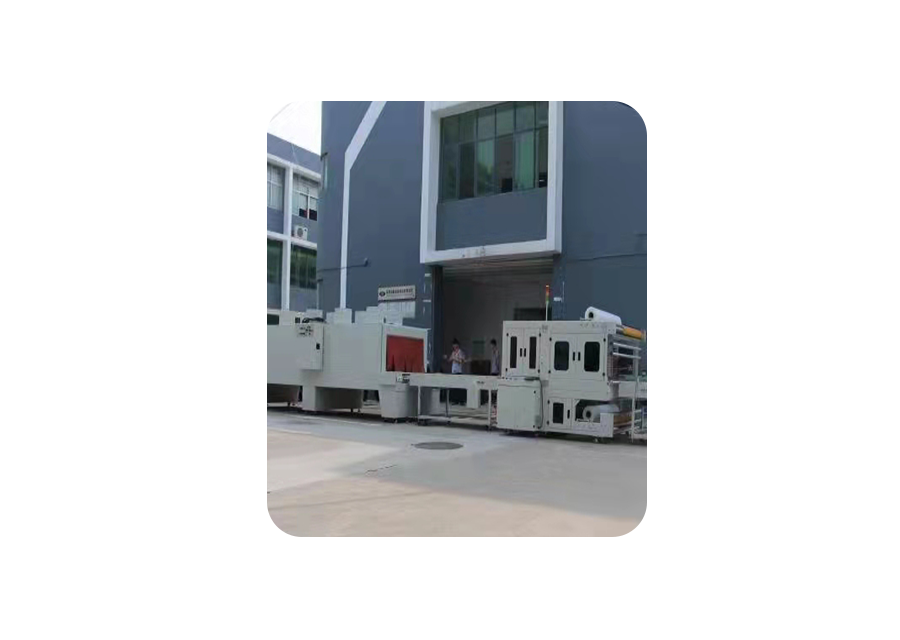

Revolutionizing E-Commerce Logistics: The Critical Role of Automated Packaging Machines in 2026

The global e-commerce boom has transformed consumer expectations, demanding faster, cheaper, and more sustainable delivery solutions. At the heart of this transformation lies automated packaging technology—a game-changing force that optimizes order fulfillment, reduces waste, and enhances customer satisfaction. This article explores how automated packaging machines are reshaping the logistics landscape, supported by data-driven insights and real-world applications.
1. The Rise of Automated Packaging in E-Commerce
The exponential growth of online shopping has placed unprecedented pressure on logistics networks. Automated packaging machines now serve as the backbone of efficient order processing, addressing three core challenges:
a. Speed and Scalability
With global e-commerce sales projected to hit $6.3 trillion by 2025, businesses require systems capable of handling high-volume, high-velocity workflows. Fully automated packaging lines, such as those from ProMachand Sealed Air, achieve throughput rates exceeding 1,500 packages per hour, reducing manual labor dependency by 70% .
b. Customization and Flexibility
Consumers now expect personalized packaging solutions. Modular machines like Automated Packaging Systems’AI-driven form-fill-seal units adjust to variable product dimensions (e.g., electronics, apparel) in real time, minimizing material waste and maximizing cube utilization in shipping containers .
c. Sustainability Imperatives
Regulatory pressures and eco-conscious buyers have accelerated demand for recyclable and biodegradable packaging. Machines integrating Sealed Air’si-PACK systems use 40% less corrugated cardboard by dynamically adjusting box sizes, cutting shipping costs by 15% and carbon footprints by 22% .
2. Technological Innovations Driving Adoption
Modern automated packaging systems leverage cutting-edge technologies to meet e-commerce demands:
a. AI-Powered Optimization
Machine learning algorithms analyze historical data to predict packaging requirements. For example, Amazon’sCartonWrap robots use 3D imaging to select the smallest feasible box for each item, reducing void fill by 30% and improving load efficiency .
b. Robotic Integration
Collaborative robots (cobots) like Locus Roboticswork alongside human operators to pick, pack, and seal items. These systems reduce repetitive strain injuries by 50% while maintaining 99.8% accuracy in high-mix environments .
c. IoT and Real-Time Monitoring
Smart sensors embedded in packaging machinery track metrics like seal integrity and material consumption. Siemens’MindSphere platform enables predictive maintenance, reducing downtime by 35% and operational costs by $2.1M annually for large warehouses .
3. Regional Dynamics and Market Growth
The adoption of automated packaging varies by region, shaped by logistics maturity and regulatory landscapes:
a. North America: Early Adoption Leader
The U.S. leads with 42% of global automated packaging installations, driven by Amazon’s $750M investment in robotic fulfillment centers. Companies like BVM Brunnerspecialize in high-speed case sealing for fragile electronics, achieving 99.5% defect-free shipments .
b. Asia-Pacific: Growth Engine
China’s e-commerce sector, valued at $2.3 trillion, has spurred demand for compact, energy-efficient machines. Shanghai Shengwo’s“consumer-friendly” carton systems reduce material usage by 25% through AI-guided box sizing, appealing to SMEs .
c. Europe: Sustainability Mandates
The EU’s Single-Use Plastics Directive has accelerated demand for water-based adhesive systems. Tetra Pak’srecyclable paper-based packaging lines now process 1.2M units daily, diverting 8,000 tons of plastic waste annually .
4. Overcoming Implementation Barriers
Despite their benefits, businesses face hurdles in adopting automated packaging:
a. High Initial Costs
While ROI improves over time, upfront investments ($500K–$2M) deter SMEs. Leasing models and government subsidies (e.g., the U.S. Section 179 tax credit) are mitigating this barrier .
b. Technical Complexity
Integrating legacy WMS systems with new machinery requires API customization. Rockwell Automation’sFactoryTalk platform simplifies integration, reducing setup time by 60% .
c. Workforce Adaptation
Upskilling programs, such as UPS’sRobotics Training Academy, are critical. Companies report a 40% productivity boost after 3 months of operator training .
5. The Future of E-Commerce Packaging
Emerging trends promise to redefine automation:
a. Fully Autonomous Packaging Hubs
Self-contained units like Zebra Technologies’SmartPack combine robotic arms, vision systems, and blockchain for end-to-end traceability. Pilot projects in Singapore reduced delivery times by 2 hours .
b. Edible and Water-Soluble Packaging
Innovations from Notpla(algae-based materials) and Evoware(seaweed films) are gaining traction. These solutions align with Amazon’s 2030 “Climate Pledge” to achieve net-zero carbon emissions .
c. AI-Driven Demand Forecasting
Tools like Locus’predictive analytics optimize packaging inventory, cutting overstock by 30% and waste by 18% during peak seasons

